
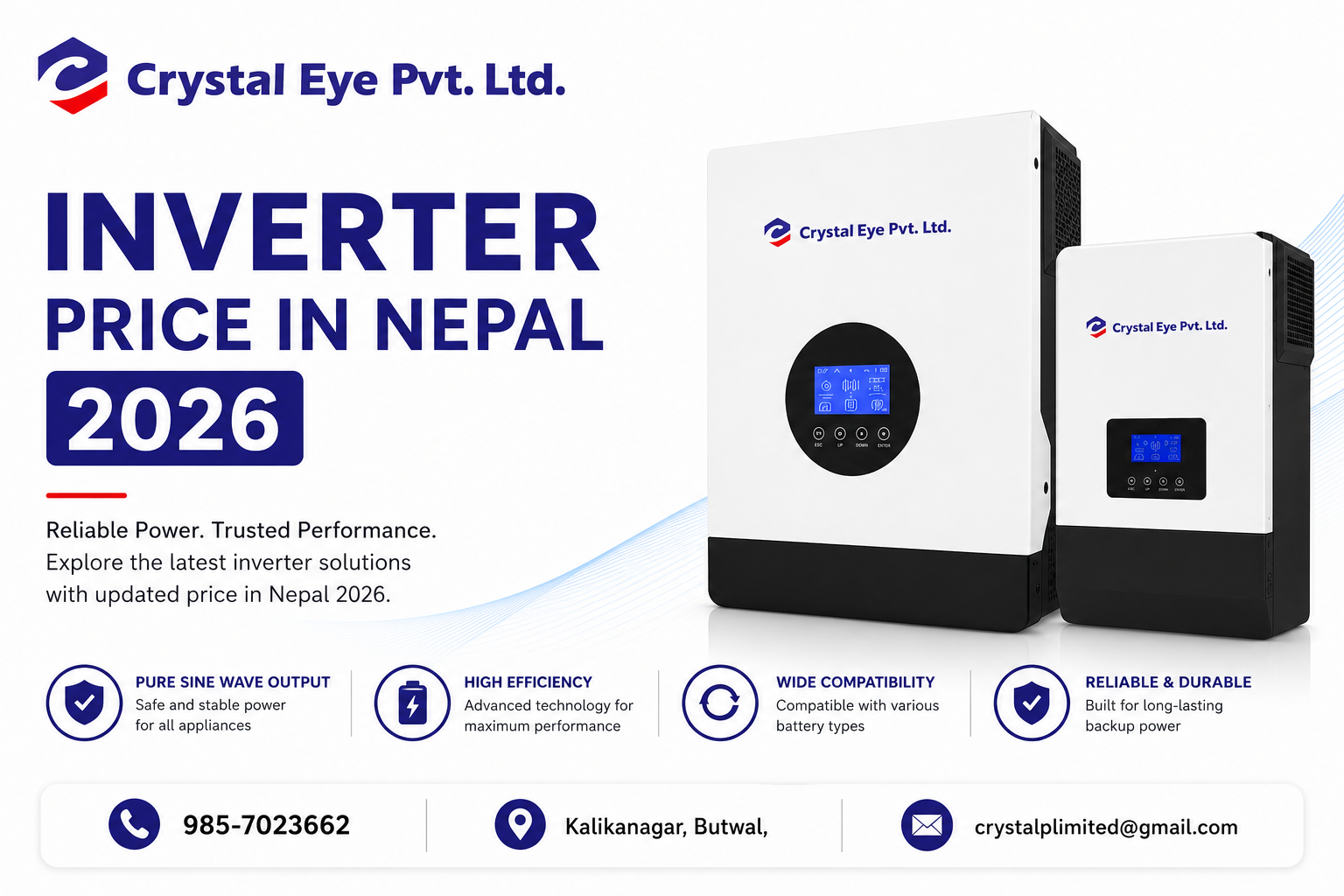
Most buyers compare inverter price in Nepal the same way they compare a phone: by looking at the number on the tag. But an inverter is an engineered power device, and the inverter price in Nepal reflects real technical differences that most shops never explain. As the authorized national importer for CRYSTAL Brand Home UPS and batteries, we want to break down exactly what you are paying for.
The Real Technical Drivers Behind Inverter Price in Nepal
1. VA Rating (Load Capacity)
The VA (Volt-Ampere) rating tells you how much load the inverter can run at once. A higher VA rating, from 850 VA up to 10 kVA in our range, means more copper, a bigger transformer, and a stronger circuit board, which directly raises the inverter price in Nepal.
2. Sine Wave vs. Square Wave
This is the single biggest hidden factor in inverter price in Nepal comparisons:
- Square/Modified Sine Wave – Cheaper, but can damage sensitive electronics like refrigerator compressors and motors over time.
- Pure Sine Wave – Produces clean power identical to grid electricity, safe for all appliances, but costs more due to advanced circuitry.
If a quoted inverter price in Nepal seems unusually low, check whether it is actually a pure sine wave unit.
3. Battery Chemistry
The battery is often the larger cost component in any inverter setup:
| Battery Type | Lifespan | Relative Cost |
|---|---|---|
| Flat Plate Lead Acid | 2-3 years | Lowest |
| Tall Tubular Lead Acid | 4-5 years | Mid-High |
| Solar-Compatible Tubular | 5+ years | Highest |
CRYSTAL and ADDO branded Tall Tubular batteries cost more upfront but lower the effective inverter price in Nepal per year of use, since replacements are needed less often.
4. Brand and Import Authorization
Grey-market inverters imported informally are cheaper but come with zero warranty backing in Nepal. As the official national importer for CRYSTAL Brand inverters and batteries, our inverter price in Nepal includes full local warranty, spare parts availability, and authorized service, which unbranded imports cannot offer.
Inverter Price in Nepal: Capacity-Wise Breakdown
| Capacity | Sine Wave Type | Approx. Price Range (NPR) |
|---|---|---|
| 850 VA – 1.5 kVA | Pure Sine Wave | 12,500 – 26,000 |
| 2 kVA – 4 kVA | Pure Sine Wave | 30,500 – 69,000 |
| 5 kVA – 10 kVA | Commercial Grade | 125,000 – 260,000 |
Actual inverter price in Nepal depends on battery pairing and installation complexity. Contact us for a specification-matched quote.
Solar Hybrid PCU: A Growing Alternative
Beyond standard inverters, our Solar Hybrid PCU range lets you combine solar charging with battery backup, which changes the long-term economics even if the initial inverter price in Nepal is higher than a standard unit. Over 3-4 years, reduced grid dependency can offset the higher starting cost.
How to Read an Inverter Price Quote Correctly
Before comparing inverter price in Nepal quotes from different sellers, confirm these five details are specified, not assumed:
- Exact VA/kVA rating
- Sine wave type (pure vs modified)
- Battery brand, AH rating, and chemistry
- Warranty period (inverter and battery separately)
- Whether installation and commissioning are included
Frequently Asked Questions
Why does inverter price in Nepal vary so much for the same VA rating?
Two inverters with identical VA ratings can differ in price due to sine wave type, battery quality, and brand warranty support, which are the real cost drivers, not just the VA number.
Is pure sine wave worth the higher inverter price in Nepal?
Yes, for homes with refrigerators, motors, or medical equipment. Modified sine wave can shorten the lifespan of such appliances over time.
What battery pairs best with a home inverter?
Tall Tubular Lead Acid batteries are the most common pairing for home inverters in Nepal, offering a good balance of lifespan and cost.
Does a higher inverter price in Nepal always mean better quality?
Not automatically, but a price that seems far below the market range for a given VA rating and battery type usually indicates a compromise on sine wave quality, battery grade, or warranty support.
How often should an inverter battery be replaced?
Flat plate batteries typically need replacement every 2-3 years, while Tall Tubular batteries last 4-5 years with proper charging cycles.
Conclusion
Understanding what drives inverter price in Nepal lets you compare quotes on real specifications rather than just the sticker price. VA rating, sine wave type, battery chemistry, and authorized brand backing are what separate a genuinely fair price from a false bargain.
For a technical overview of how inverters work, see Wikipedia’s power inverter article, and for Nepal’s current power supply situation affecting backup needs, visit the Nepal Electricity Authority.
Crystal Eye Pvt. Ltd. (Crystal POWER)
Butwal, Kalikanagar, Rupandehi, Lumbini Province, Nepal
📞 071-437424 | +977-9857023662 | +977-9851103943